GIU actively participated in the UN HESI 2026 Annual Forum

On July 9, 2026, Global Interfaith University proudly participated in the prestigious 2026 Higher Education Sustainability Initiative (HESI) Annual Forum. This global gathering brought together higher education leaders, policymakers, and sustainability experts to advance the role of universities in achieving the Sustainable Development Goals (SDGs). HESI is chaired by the United Nations Department of Economic and Social Affairs (UN DESA), UN University, UNESCO International Institute for Higher Education in Latin America and the Caribbean (IESALC), and the Sulitest Association. Other UN partners include UNESCO, UN Environment Programme, UN Global Compact’s Principles for Responsible Management Education initiative, UN-HABITAT, UNCTAD, UNITAR, UN Office for Partnerships, and UN Academic Impact.
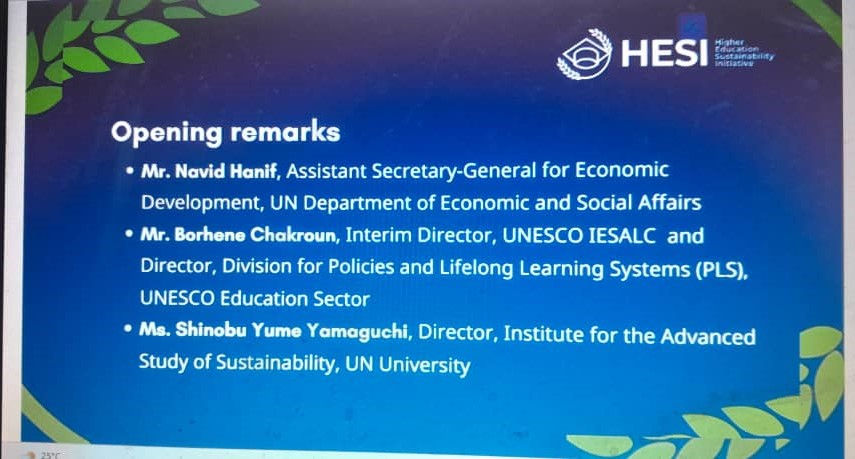
The forum commenced with an insightful opening session, which set the tone by contextualizing the event within current global challenges such as technological disruption, inequality, AI advancements, and financial pressures impacting higher education. Esteemed speakers including Mr. Navid Hanif from the UN, Mr. Borhene Chakroun from UNESCO, and Ms. Shinobu Yume Yamaguchi from UN University highlighted the urgent need for resilient, inclusive, and innovative education systems aligned with SDGs.
Following the opening, the forum delved into four dynamic sessions. The first session focused on transforming higher education institutions to foster sustainable futures. Experts discussed how universities can shift from mere commitments to operational changes—embedding sustainability into governance, curricula, campus management, and leadership. Emphasis was placed on equipping learners with green skills, systems thinking, digital literacy, and ethical reasoning, ensuring no one is left behind. Leaders like Ms. Katrin Kohl and Ms. Subarna Sivapalan shared strategies for fostering equity and accountability, with Action Groups exploring how to bolster sustainability competencies and incentives.
The second session explored the vital role of universities as knowledge producers and co-creators. It underscored the importance of academic freedom, institutional autonomy, and critical inquiry in generating impactful research. Panelists from Yale University and other institutions discussed how universities can collaborate with communities, governments, and indigenous knowledge holders to make research more accessible and relevant for sustainable development. The role of AI and innovative dissemination methods was also highlighted in making knowledge more inclusive.
The third session examined how partnerships can drive SDG progress through campus transformation, community engagement, and cross-sector collaboration. Speakers from institutions in Namibia, Saudi Arabia, and Grenada shared successful partnership models, including initiatives like climate resilience projects and urban innovation labs. Examples from Green Gown Award finalists showcased practical, measurable impacts in areas such as clean water, renewable energy, and urban sustainability.
The final session looked ahead beyond 2030, discussing how higher education can strategically contribute to sustainable development in the long term. Thought leaders emphasized the importance of fostering collaborations, innovative policies, and action-oriented messaging to sustain progress.

Closing remarks by Mr. Ola Goransson summarized key takeaways and outlined next steps for ongoing commitment. Global Interfaith University’s participation underscored its dedication to fostering inclusive, ethical, and innovative education that advances global sustainability. The forum demonstrated that higher education must continue leading transformative change to realize the SDGs, inspiring a collective effort towards a more sustainable future.


Comments